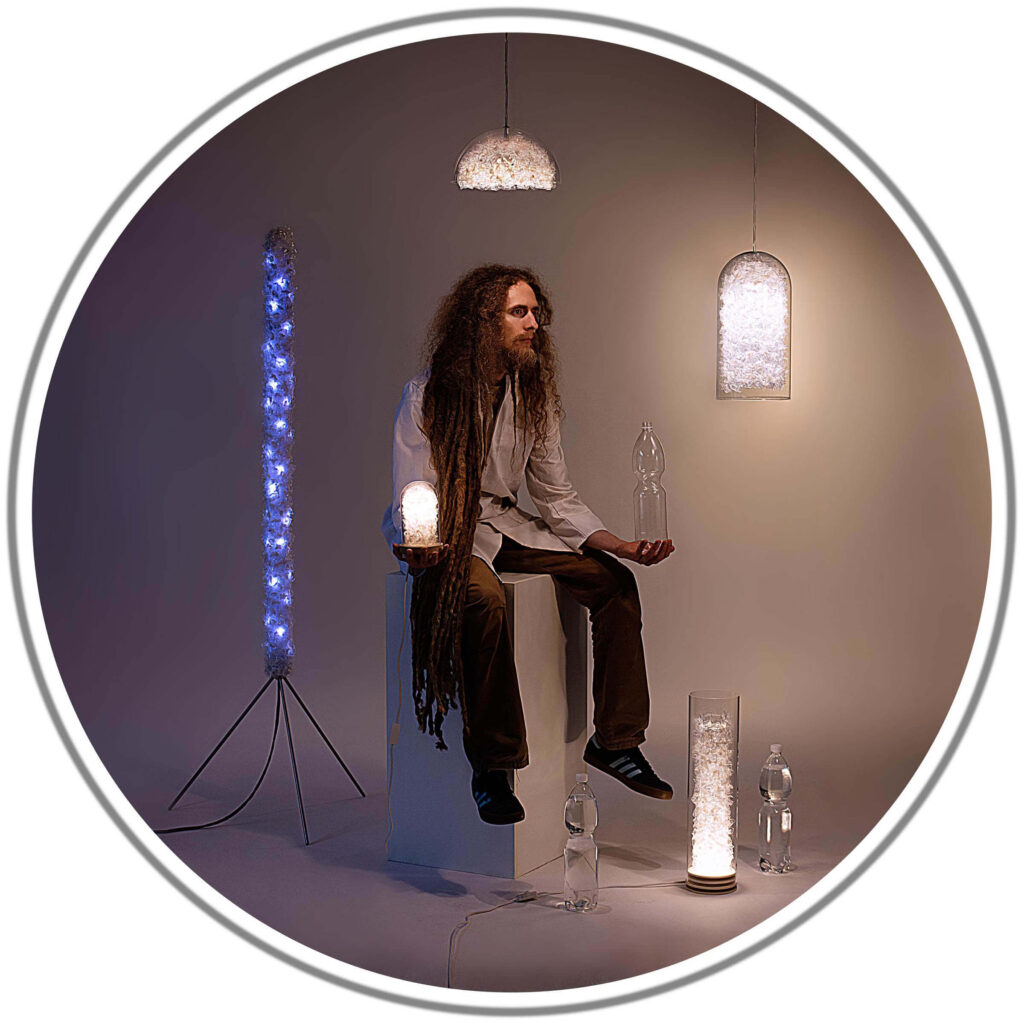
HAZ (b. 1981, Austria) is a contemporary artist whose patented PETing technique transforms post-consumer thermoplastic waste into sculptures, light installations, and relief paintings.
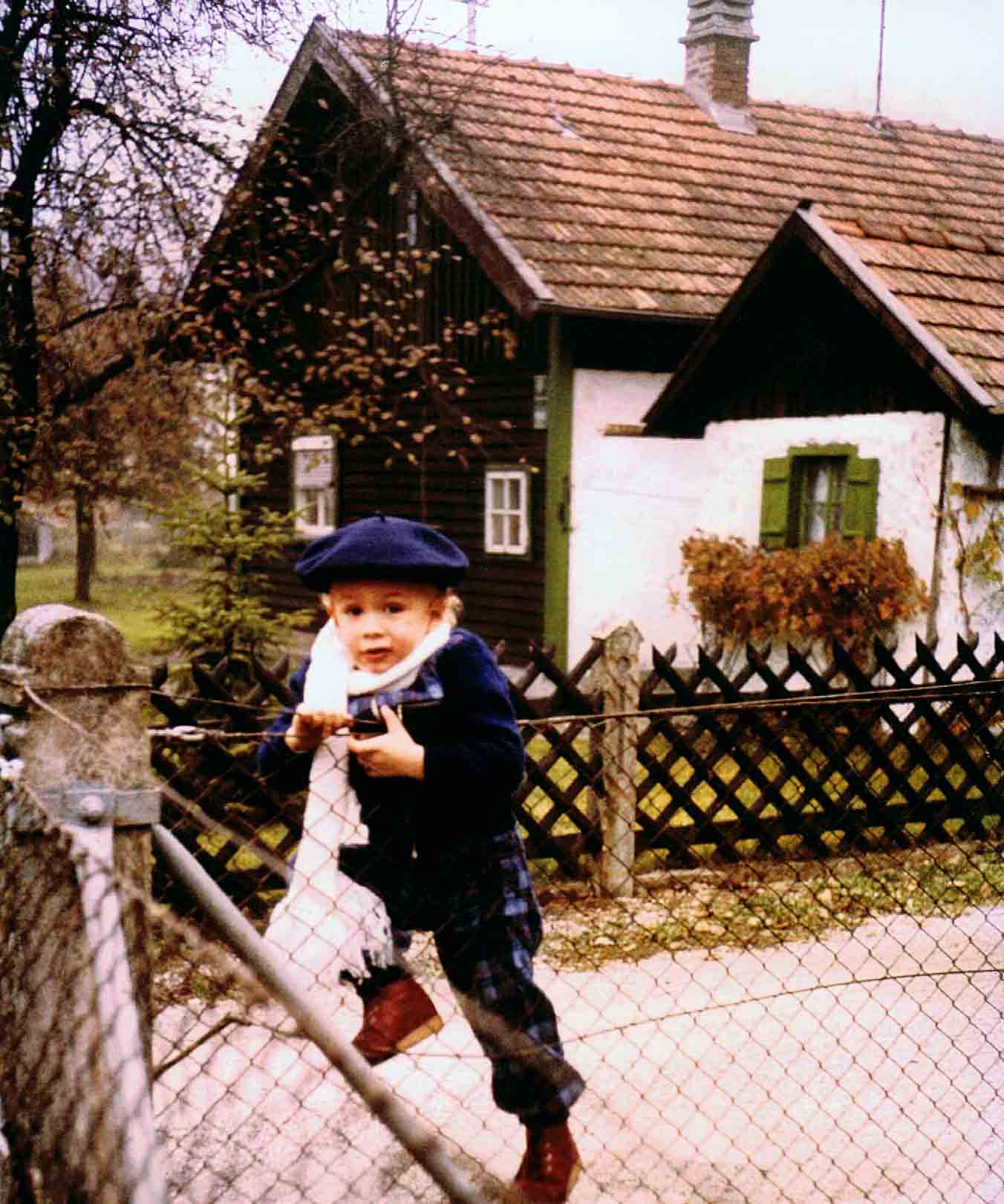
He was born in Braunau am Inn, a small town in Upper Austria with a single entry in the history books: the birthplace ofAdolf Hitler. The house stands two minutes’ walk from his studio. The Machthaber series grows from this ground.
Child of a cosmetician and an architectural draftsman for electrical systems, Haz’s path to international recognition was anything but linear. RaisedinBraunauamidtheweightofitsinfamoushistory, he developed an early antagonistic relationship with his environment.
As a child, he dreamed of conquering the art world, yet his journey was one of quiet rebellion, where every obstacle became raw material for a future artistic mission.
DREAMER
His first encounter with the Old Masters—Leonardo da Vinci, Kazimir Malevich, and Salvador Dalí—came through his grandmother, a landscape and portrait painter working in oils. Hidden in his grandmother’s attic, a notebook from his business school years was recently discovered. It contains no accounting formulas—only a single, repeated phrase: ‘The patent will be the key.’
While attending business school, Haz skipped the curriculum and filled his notebooks with graffiti tags and elaborate sketches. Those secret drawings slipped out during nocturnal adventures, appearing on the walls of his hometown—and eventually his school. One night he had a vivid, hyper‑real dream in which his life played out like a film: he became a celebrated artist, solved a mathematical riddle, and discovered how to spread a new gospel through music. The dream was so powerful that from that moment on he devoted himself entirely to art.
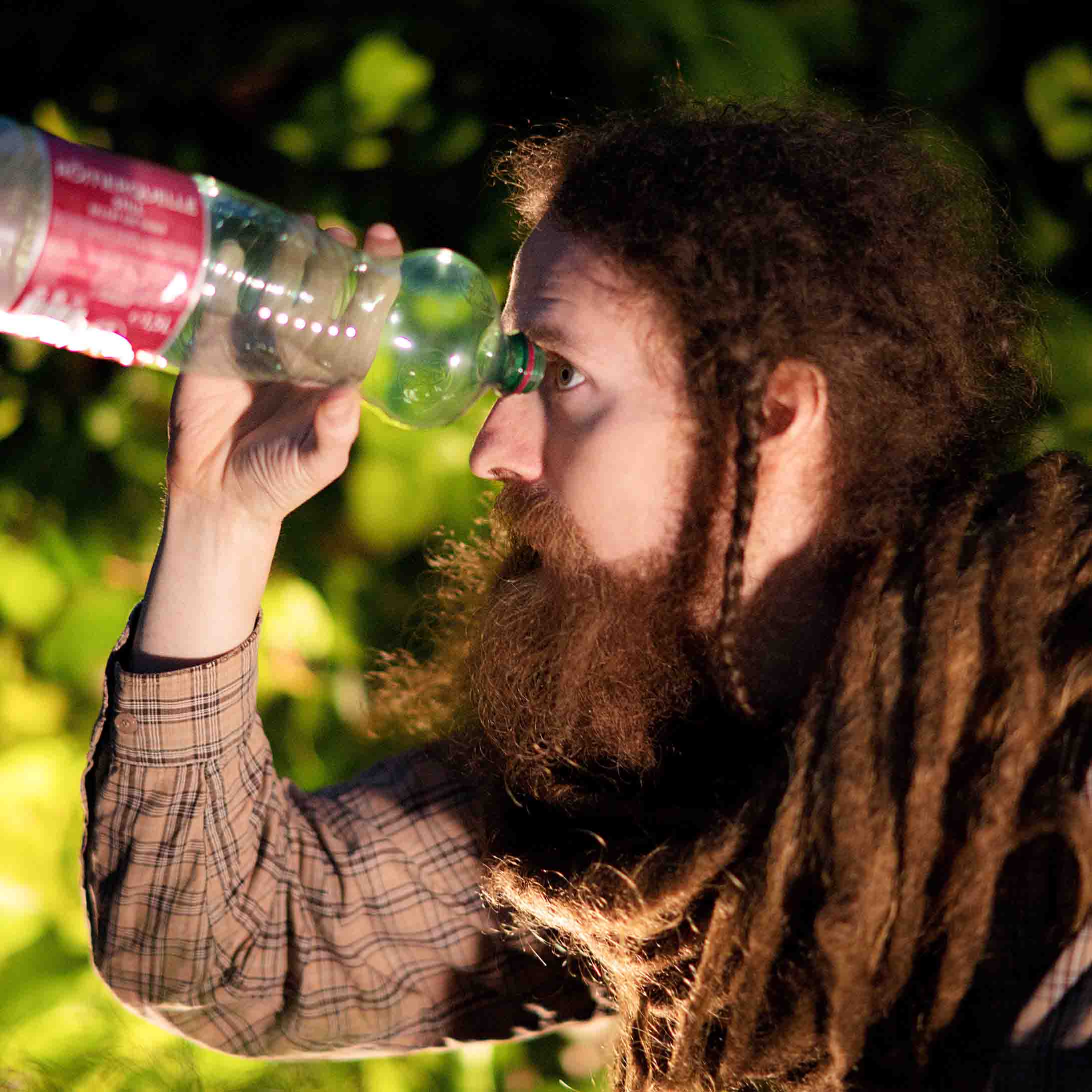
“Life is like a bottle,” he now reflects with a wry smile. “When you turn it upside down, often more comes out of it.” The punchline of his own early failures would take years to land, but he never forgot it.
JOURNEY
The conceptual and material turning point occurred during a humanitarian mission to Montenegro. Traveling with Pater George Elsbett from the Legionaries of Christ, distributing sweets and toys to children in coastal communities, Haz was confronted with a landscape that split the world in two: pristine Adriatic coastline on one side, a mountain of human waste on the other. Families were building homes directly on the dumpsite.
Before leaving the dumpsite, a local child pressed a single, crushed, sun-bleached bottle cap into Haz’s palm. He has kept it in his pocket ever since. To this day, he places it on his studio workbench before beginning any new PETing process. This visceral experience forced him to abandon traditional acrylics. Instead, he began to melt discarded PET bottles, using the entire object in a zero-waste process he calls Revive Value.
His intention was radical: to change the perception of human-caused waste—the most potent reflector of our collective zeitgeist—and elevate it into something beautiful: Fine Art. The supermarket’s limited color palette became his chromatic constraint, a signature element of his emerging conceptual framework.
PATENT PETing
Returning to his basement studio, Haz began a period of intense material experimentation. He discovered that the unique interplay of transparency and opacity created by his melting process, when combined with a light source, produced an unprecedented shadow-play on the wall—an aesthetic phenomenon no one had yet documented.
Recognizing its novelty, he filed for and received a technical patent (P21-PETing) covering any thermoplastic reaction for artistic purposes. His primary focus became polyethylene terephthalate (PET), valorizing the very material that defines our global packaging economy.
The patent transformed him from a hobbyist into an artist-inventor, a rare hybrid in the contemporary art scene.
For years, Haz worked full-time in a kitchen, creating art in his parents’ basement, largely ignored. The first crack in the wall came when journalist Raffaela Lindorfer wrote a profile for Austria’s “Kurier” newspaper.
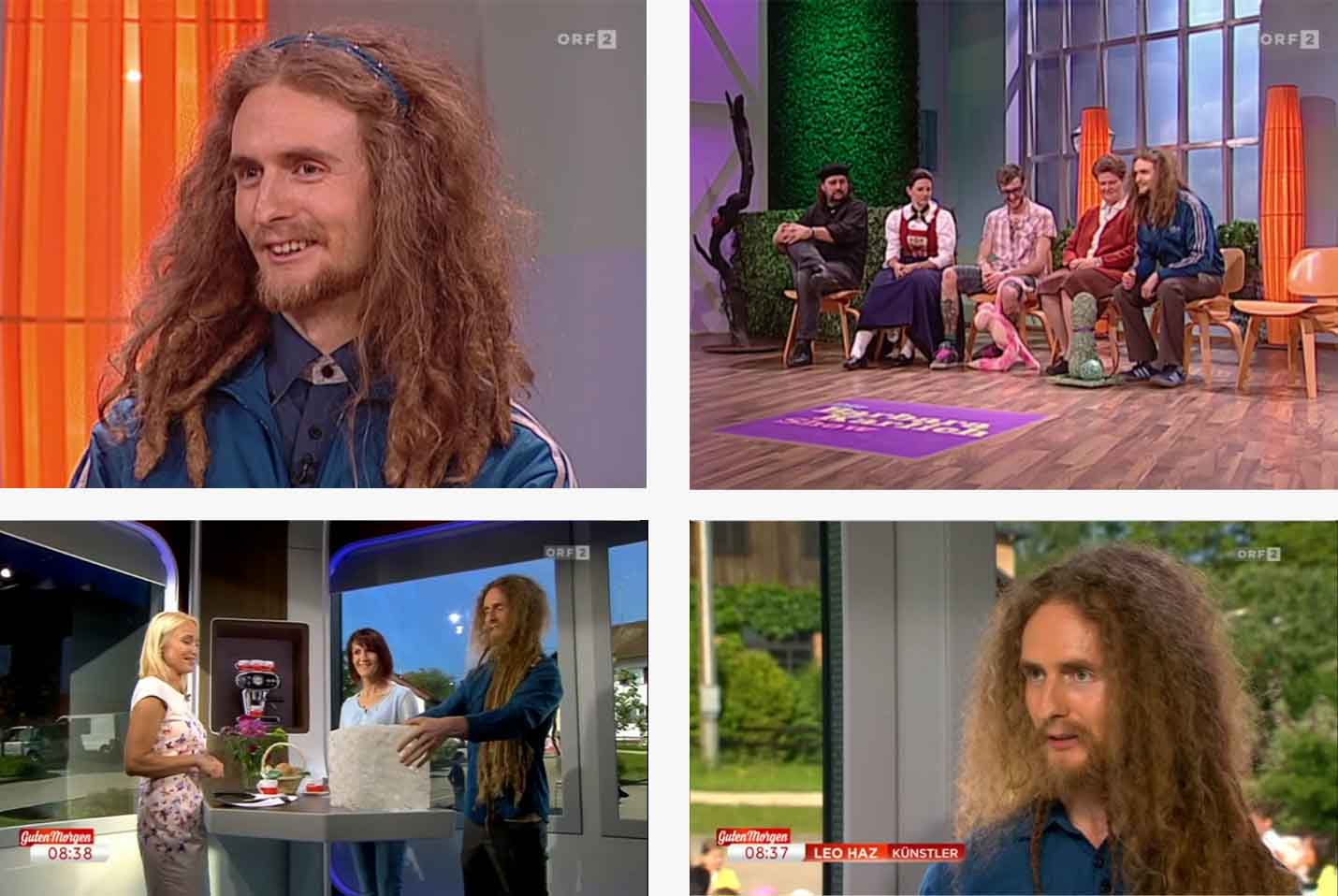
This led to a first TV appearance in Vienna, where he was laughed at and criticized for making “ugly” art. No works sold. Yet he persisted, developing new skills like programming micro-controllers for LEDs to illuminate his sculptures. The tide turned on a second national television appearance, this time on the morning show “Guten Morgen Österreich.”
Aftertheshowwasbroadcast,hissculpturessoldquicklyandhebeganreceivinginternationalcommissions. The validation was not just financial; it was a profound institutional recognition that his patented technique had found its audience.
HAIRY TALES
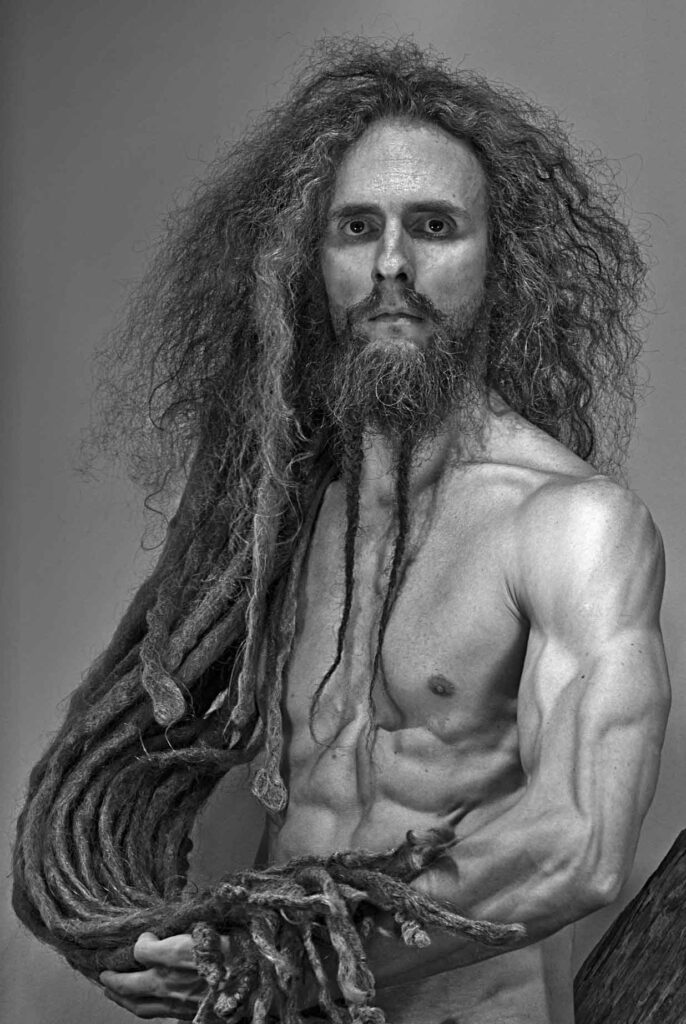
During his years of obscurity, Haz made a private vow: he wouldcut his hair only after completing major international exhibitions. What began as a personal totem became a performative obsession, a physical manifestation of his deferred dreams.
His long hair, growing past two meters, became a surreal prop for a series of funny, fantasy-themed videos and zodiac-inspired photo works—showing him doing gymnastics, running, or throwing his hair from rooftops.
Simultaneously, he began writing a humorous, anthropomorphic narrative about PET bottles bickering on a supermarket shelf, a playful counterpoint to the seriousness of his ecological mission. This period was a masterclass in artistic resilience, using humor and ritual to survive the long haul.
CO₂ PETing
The COVID-19 pandemic forced the closure of his Braunau studio, pushing him to sell exclusively through online galleries. A Harvard student, now professor—who had purchased a Haz sculpture via the Saatchi Art online gallery—contacted him with a radical proposition: Could Haz create CO₂-absorbing sculptures by mixing activated carbon with his patented PETing technique?
The initial prototype for the ‘Black Matters’ series was made in his studio, in a clandestine, off-grid laboratory. For three weeks, Haz worked without phone or internet, the only sounds being the wind and the hiss of melting PET. The collaboration resulted in a collection of pitch-black sculptures and reliefs.
In these works, the porous carbon is protected within a PET matrix, allowing it to breathe and absorb atmospheric CO₂ while remaining structurally intact. This breakthrough positioned Haz at the intersection of ecological activism, material science, and conceptual art—a truly 21st-century practice.